


Shifting Your Perspective: From Frustration to Mastery
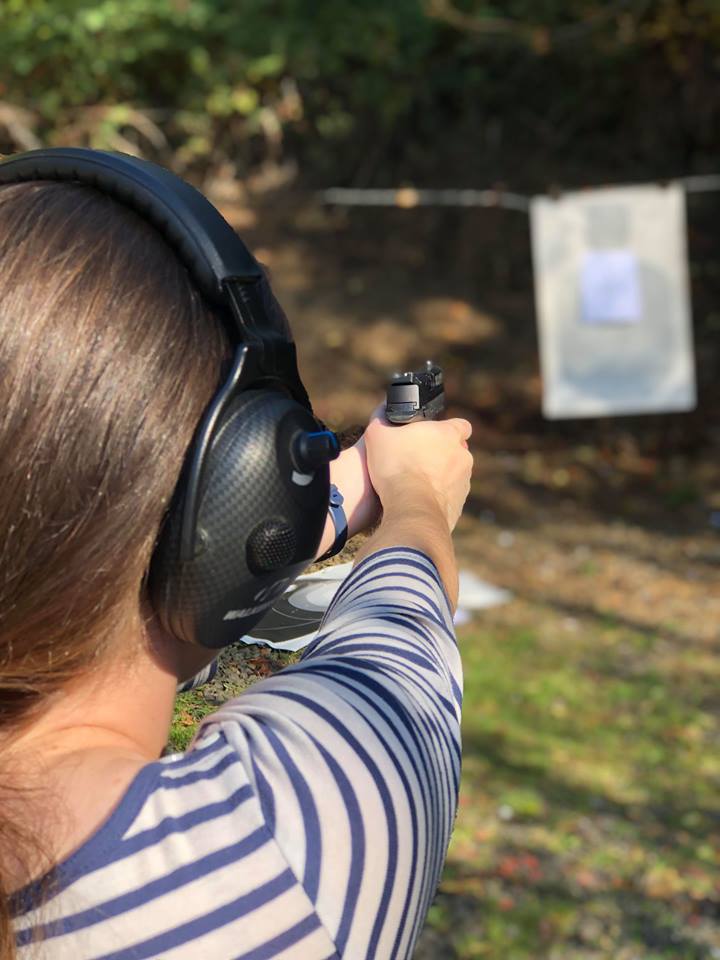
If you’ve ever left the range feeling like you “just aren’t good at this,” you aren’t alone. Many students struggle because they were started with unrealistic expectations or the wrong equipment. It’s important to remember: Never compare your “Day One” to someone else’s “Year Ten.”
To stay engaged and encouraged as you learn, keep these strategies in mind.
1. Define Your Goal
Not every trip to the range has the same objective. Before you start, ask yourself: What am I trying to achieve today? * High-level Marksmanship: Focusing on tiny, precise groups.
- Practical Defensive Shooting: Focusing on getting effective hits on a larger target.
Your targets will look very different depending on the goal. Understanding which one you are practicing helps you judge your progress fairly.
2. Move the Goalposts (Literally)
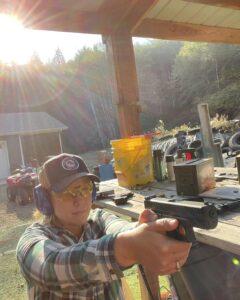
Don’t feel pressured to shoot at targets 15 or 20 yards away when you are just starting. To build a “success cycle,” start close—usually between three and five yards.
- The Win: Seeing a tight group at a close distance gives your brain the positive reinforcement (and dopamine) it needs to stay motivated.
- The Progression: Once you are consistently successful at five yards, move the target back. Success is built in layers, not leaps.
3. Master the Mechanics Without the “Boom”
If you are struggling with a small, lightweight “sub-compact” pistol, you’re likely dealing with significant recoil. This often leads to a pre-ignition flinch, where you subconsciously flinch in anticipation of the noise and kick.
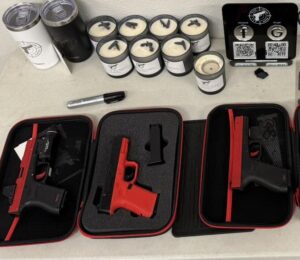
- Try Dry-Fire: Use a SIRT training pistol or an unloaded firearm (in a safe environment) to practice.
- The Benefit: By removing the recoil, you can focus entirely on your grip, sight alignment, and trigger press. Once these mechanics have a neural pathway (aka muscle memory), the “boom” of live fire becomes much easier to handle.
4. It’s Physics, Not Personality
If you miss a shot, don’t take it personally. Shooting is a mechanical puzzle, not a reflection of your worth.
- The “Why”: You aren’t “bad at shooting”; you are likely reacting to the physics of the firearm.
- Diagnostic Trigger Drills: Work with an instructor on drills like the “Mudgett Drill,” where they might manipulate the trigger while you aim. If the shot hits the bullseye, you’ve just proven your aim is perfect—now you know to focus specifically on your trigger finger.
The most important thing you can take home from the range isn’t a perfect target—it’s the confidence to come back. By setting attainable goals and using the right tools, you can turn those initial frustrations into a lifelong skill and a rewarding hobby.
About the Author
Shari Stoican is on training staff at Willapa Firearms Training in Raymond, WA. She
has a passion for helping students become competent and confident shooters.